
SouthWorks and the Ithaca Empowerment Center
A new model for development, workforce access, and regional opportunity
By Melissa Suchodolski, Development Partner, SouthWorks; Chairperson, Ascend Workforce Solutions | July 10, 2026 | Building the Southern Tier
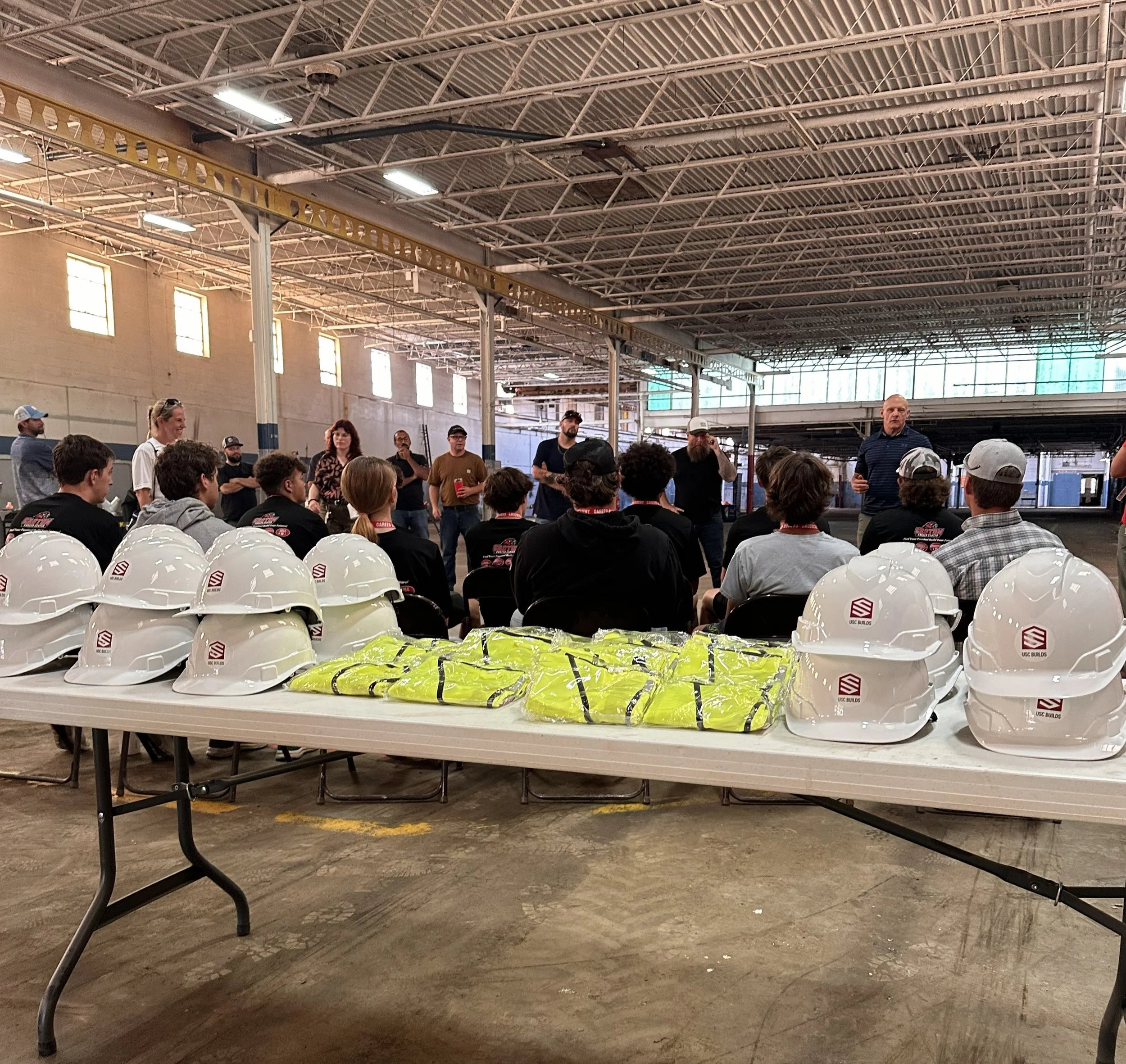
Across New York and beyond, communities are rethinking what successful development should look like. For too long, redevelopment has been measured primarily by physical outcomes: square footage restored, dollars invested, tenants secured, and tax base increased. Those metrics matter, but they are incomplete. The more important question is whether development can also serve as a direct engine for human advancement. Can projects be designed not only to transform buildings and sites, but also to expand access, readiness, and mobility for the people who live closest to the opportunity?
At SouthWorks in Ithaca, that is exactly what we are working to do.
SouthWorks is a large-scale adaptive reuse and redevelopment effort on a historic former industrial campus. Once fully realized, the site will include housing, commercial and office uses, manufacturing space, and community-serving amenities within a mixed-use environment that reflects both the legacy of the property and the future needs of the region. The vision is ambitious: bring a dormant industrial asset back to life, respond to housing demand, attract employers, support entrepreneurship, create jobs, and establish a more inclusive and durable model for regional revitalization.
Yet the most compelling idea behind SouthWorks is not simply that a site can be rebuilt. It is that development itself can be structured as a workforce system.
That belief comes into focus through The Ithaca Empowerment Center and the broader workforce strategy being advanced there through Ascend Workforce Solutions.
A HISTORIC SITE WITH A NEW PURPOSE
SouthWorks sits on land that once stood at the center of Ithaca's industrial identity. For generations, the site supported manufacturing and production that shaped the local economy and provided livelihoods for working families. Like many industrial campuses across the Northeast, it eventually became a symbol of underused potential: architecturally significant, strategically located, and economically important, but no longer functioning at the scale or purpose for which it had originally been built.

Photo Credit: Coleen Foley
The redevelopment of SouthWorks seeks to reverse that trajectory. Rather than allowing the site to remain an isolated remnant of the past, the project is being re-imagined as a place of production, housing, innovation, and community investment. This is not demolition and replacement for its own sake. It is deliberate repurposing. It honors the legacy of the site while building new relevance around today's realities: housing affordability, labor shortages, sustainability, shifting industrial practices, and the need for stronger regional talent pipelines.
The SouthWorks plan includes a broad mix of uses intended to create a true ecosystem rather than a single-purpose development. Housing is central, with a mix of affordable, workforce, and market-rate options. Commercial and office space will support business activity and services. Manufacturing and light industrial uses preserve the site's long connection to making and production. Public amenities and community-serving components help ensure the campus functions as part of the region's economic and social fabric rather than as an isolated private investment.
That scale creates unusual opportunity. SouthWorks is large enough, long enough in duration, and broad enough in scope to do more than host construction activity. It can become a platform for training, talent development, career exposure, and long-term employer connection across multiple phases of work.
THE ITHACA EMPOWERMENT CENTER AS WORKFORCE INFRASTRUCTURE
At the center of this strategy is The Ithaca Empowerment Center, envisioned not simply as another component of the project, but as a workforce hub and community anchor. It's intended to house an integrated ecosystem of support that connects training, employer engagement, case management, childcare, and professional services in one place.
That physical proximity matters.
One of the most persistent failures in workforce systems is fragmentation. Training is often delivered in one place, support services in another, employer relationships somewhere else, and the actual jobsite in an entirely different setting. Participants are expected to navigate a maze of disconnected systems while also managing transportation, childcare, income instability, and the personal demands that come with trying to build a different future. Then everyone is surprised when persistence becomes difficult. An astonishing outcome, apparently, when systems are designed as obstacle courses.
The Ithaca Empowerment Center is meant to reduce that fragmentation. It brings workforce development closer to real employers, closer to active jobsites, and closer to the supports that help individuals persist. It creates a home base where preparation, coaching, connection, and opportunity can operate together rather than in silos.
For Ascend Workforce Solutions, that is core to the model. Ascend was built around the idea that workforce development is most effective when it is embedded in the conditions of real work. In construction, readiness is not only about completing a curriculum. It is about understanding pace, communication, safety, team dynamics, field expectations, jobsite culture, and how to show up consistently in demanding environments. Those things are difficult to teach in abstraction. They are best learned through direct exposure, hands-on practice, and structured employer engagement.
A PLACE-BASED, EMBEDDED, DECENTRALIZED MODEL
The Ascend approach at SouthWorks is place-based, embedded, and decentralized.
Place-based means it's rooted in the actual conditions of Ithaca and the Southern Tier. It responds to regional labor needs, housing pressures, employer demand, and the opportunity created by one of the most significant redevelopment efforts in the area. It's not a generic program dropped into a market. It is shaped by the realities of the place itself.

Photo Credit: Connie Thomas
Embedded means workforce development is part of the development strategy from the beginning. It is not an add-on introduced after the capital stack is assembled or the marketing language is written. The worksite becomes a learning environment. Employers become active partners in shaping preparation. Career access is tied to real development activity, not hypothetical opportunities.
Decentralized means the model is designed to work through a network rather than relying on one institution. Schools, community organizations, workforce agencies, contractors, apprenticeship partners, open-shop employers, labor organizations, colleges, childcare partners, and regional employers all have a role to play. The goal isn't to replace existing providers, but to connect them more intelligently around real labor demand and shared outcomes.
This networked structure is one of the great strengths of the SouthWorks approach. It creates multiple points of entry for multiple populations. Young people exploring career pathways, adults seeking stable employment, underemployed residents looking to move into the trades, women and people of color who have been historically underrepresented in construction, and individuals who need a bridge back into the workforce can all engage through different on-ramps. The model does not depend on a single doorway. It creates many.
EXPANDING CHOICE THROUGH MULTIPLE CAREER PATHWAYS
One of the most important strengths of this workforce strategy is that it's not designed to steer participants toward only one outcome. It is designed to prepare them well enough that they have meaningful choices.
The Ithaca Empowerment Center can serve as an on-ramp into the construction industry, helping individuals build the foundational habits, exposure, and competencies needed to take the next step that is right for them. For some, that next step may be a formal apprenticeship pathway. For others, it may be direct-to-work opportunities with contractors or employers who need talent now. For others still, it may involve additional credentialing, specialized skills training, or a staged path that allows them to build confidence and stability before advancing further.
That flexibility isn't a weakness – it's one of the model's greatest strengths.
Too often, workforce systems are designed around institutional preferences instead of participant realities. They assume one "best" path without fully accounting for where an individual is in life, what barriers they are navigating, what supports they need, how quickly they need to earn income, or what kind of work environment may be the best fit. Ascend's approach is intentionally different. It's whole-person centered, and individuals aren't treated as a unit to be placed, but as a person to be supported, developed, and empowered.
A whole-person approach recognizes that career decisions are shaped by more than aptitude alone. They are influenced by childcare needs, transportation reliability, family responsibilities, physical readiness, confidence, prior work history, income urgency, and long-term goals. A truly effective workforce model helps people understand their options and supports them in choosing the path that is best aligned with their circumstances and aspirations.
That's why this model creates value across the full employer landscape.
For apprenticeship and structured training partners, it offers a stronger feeder system. Individuals can gain exposure to the work, build basic readiness, strengthen safety awareness, improve communication, and develop the consistency and field habits that increase the likelihood of success in the next stage. When someone enters a formal training pathway with a clearer understanding of what the work demands, persistence and retention are more likely to improve.
For direct-hire employers, the same benefits apply. Employers gain access to individuals who have already been introduced to the realities of the industry, coached in workplace expectations, and supported in building the practical and interpersonal skills that matter on a jobsite. The gap between training and employment narrows. Hiring becomes more informed, and early-stage retention can improve because participants are entering work with more realistic expectations and stronger preparation.
For the region, this creates a broader and healthier talent pipeline. More people can see themselves in the industry. More employers can engage in shaping readiness. More participants can enter the field through pathways that reflect their needs and goals rather than being forced into a one-size-fits-all system.
This is especially important in construction, where the industry needs multiple doors of entry, stronger retention, and better alignment between community access and employer demand. A model like SouthWorks helps build that bridge. It gives participants meaningful exposure and practical support while preserving their agency to determine what comes next.
Ultimately, the program is not about directing people toward a predetermined answer. It is about expanding their options, increasing their readiness, and helping them move toward sustainable opportunity with greater clarity and confidence.
DEVELOPMENT AS A LIVING CLASSROOM
What makes SouthWorks especially powerful is that the workforce strategy is tied to an active, multi-phase redevelopment project. The site itself becomes a living classroom.
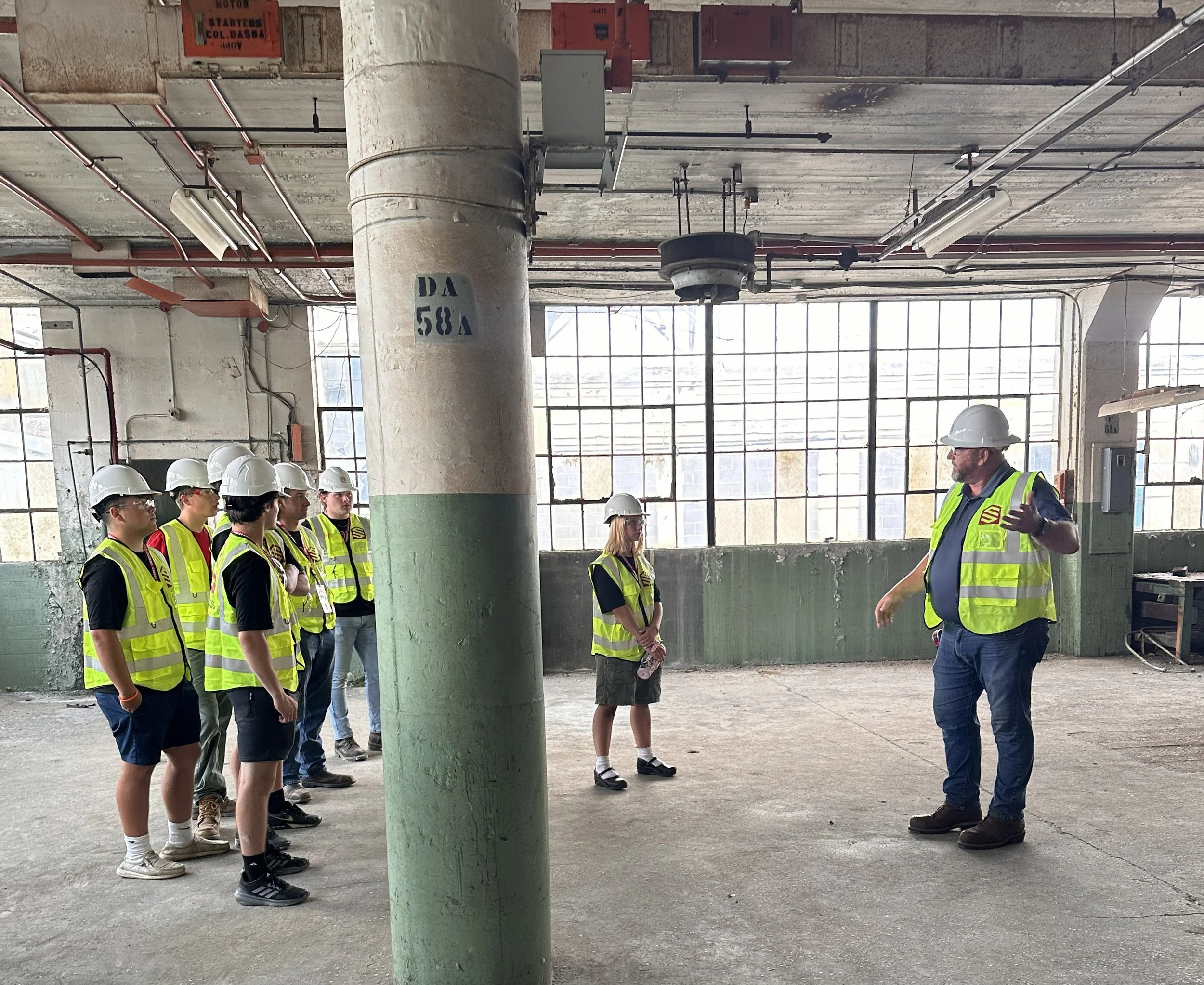
Photo Credit: Ascend Workforce Solutions
Participants don't have to imagine what construction careers look like from a distance. They can see the work. They can understand sequencing, trades coordination, project expectations, and the rhythm of a real jobsite. They can interact with field leaders, employers, and skilled tradespeople in an environment where learning is grounded in actual work rather than simulation alone.
This matters because exposure changes aspiration. Many people are capable of succeeding in construction but have never had meaningful proximity to the industry. They don't know what careers exist beyond a vague idea of "construction." They may not understand the range of roles, the advancement potential, the wages, or the pride that comes with building tangible things. When workforce development is placed inside a live development environment, those possibilities become visible.
For employers, this creates a more responsive pipeline. Training can be shaped by real demand. Feedback from the field can influence curriculum and coaching. Participants can be introduced to employer expectations earlier. Hiring becomes less abstract and more relational.
For the region, it creates a stronger return on investment. Public and private dollars supporting development are no longer only producing physical assets. They are also helping build human capital, labor force participation, and long-term career pathways.
THE IMPORTANCE OF WRAPAROUND SUPPORT
Another essential strength of this model is that it treats support services as core infrastructure rather than optional extras.
Construction workforce development often falls short when systems ignore the practical barriers that keep people from completing programs or sustaining employment. Transportation, childcare, financial instability, stress, family obligations, and lack of consistent coaching can derail even highly motivated participants.
The Ithaca Empowerment Center addresses that reality directly. By integrating support services into the workforce environment, the model recognizes that persistence isn't just about motivation. It is also about whether the surrounding conditions make participation possible.
This is particularly important for populations that have been underrepresented in the trades, including women, caregivers, and individuals from communities that have had limited access to construction career pathways. A workforce system that does not account for those barriers will continue to reproduce the same inequities it claims to solve. A system that does account for them can begin to open the field in a more authentic way.
Just as important, wraparound supports help individuals make better choices for themselves. When people are stabilized, informed, and coached, they are better positioned to select the next step that truly fits their lives, whether that means immediate employment, apprenticeship, further training, or another pathway altogether.
A REGIONAL OPPORTUNITY, NOT JUST A PROJECT FEATURE
The significance of SouthWorks extends well beyond one development site. This model has the potential to influence how redevelopment is approached across the region and beyond.
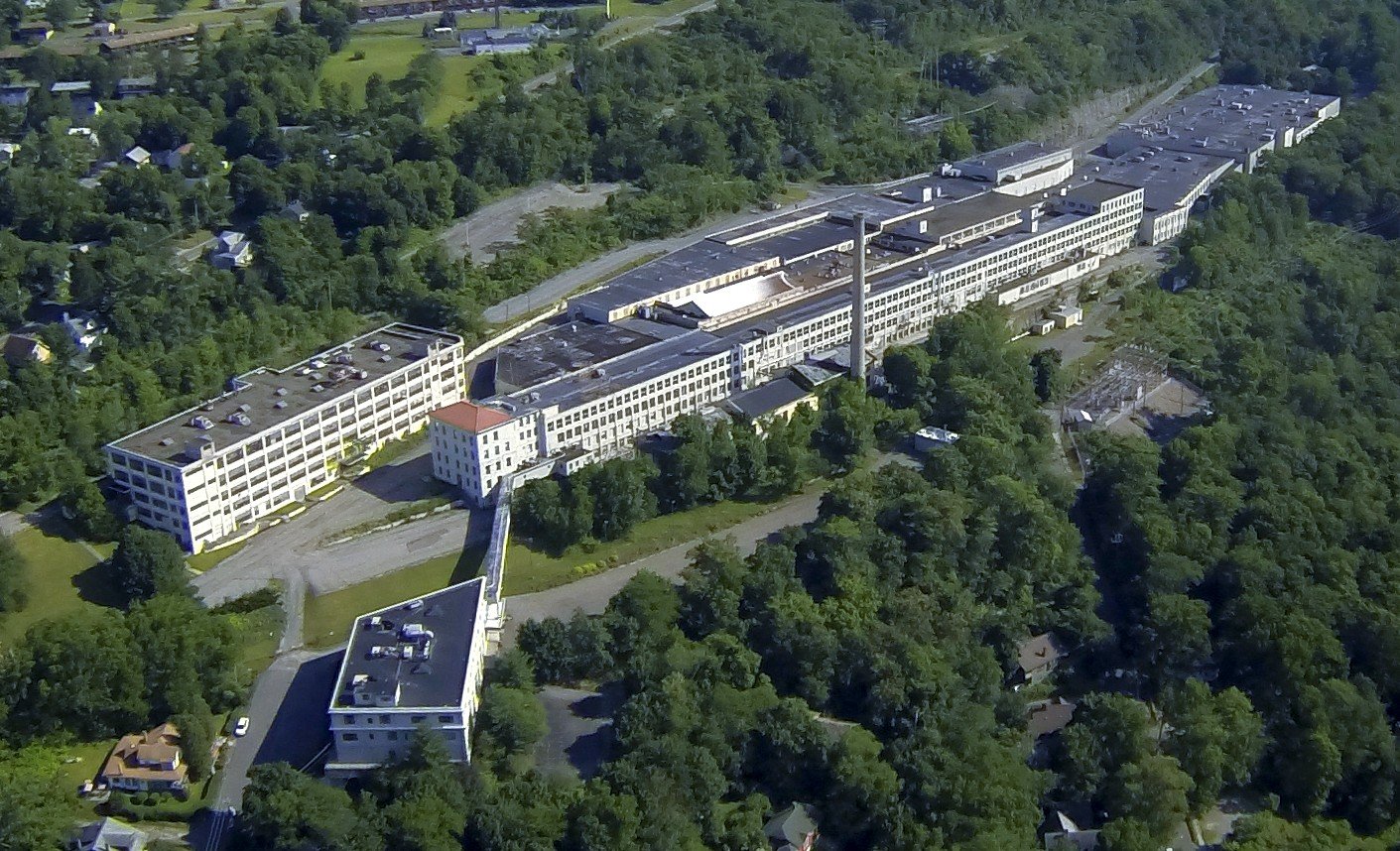
Photo Credit: William Reed
Too often, workforce commitments in development are symbolic. A few targets are set. A few partnerships are named. A few reports are written. Then the project moves on and the infrastructure disappears. SouthWorks offers the chance to build something more lasting: a permanent framework where development, employer demand, support services, career exposure, apprenticeship-connected pathways, and direct-to-work opportunities are intentionally linked.
That kind of framework can strengthen the local labor market, support succession in the trades, and create more durable regional collaboration among developers, employers, training partners, educators, and community organizations.
It also strengthens the civic case for redevelopment itself. When communities can see that a project is not only transforming buildings, but also opening real doors for residents, trust increases. Development becomes more credible as a public good. It feels less like something happening to a community and more like something being built with it.
THE FUTURE WE ARE BUILDING
The future of development should not be measured only by lease-up rates, construction value, or the aesthetics of a restored structure. It should also be measured by whether residents gain access to the careers being created, whether employers can find and grow talent, whether multiple pathways into the industry are available, and whether support systems are designed to help people actually succeed.
That is the promise of SouthWorks.
Here, adaptive reuse and economic inclusion are not separate conversations. Workforce development is not an afterthought, but a structural component of the project itself. The Ithaca Empowerment Center is intended to serve as a practical bridge between aspiration and opportunity, between exploration and readiness, and between community access and long-term career mobility.
The SouthWorks Workforce Team believes development should do more than rebuild space. It should help rebuild pathways. It should create places where people can see themselves in the future of their region and find a real route into it.
SouthWorks gives us the opportunity to prove that model at scale.
When done well, this work will do more than reshape one historic campus in Ithaca. It will help demonstrate a better way to connect revitalization, workforce access, employer engagement, and individual empowerment for years to come.